
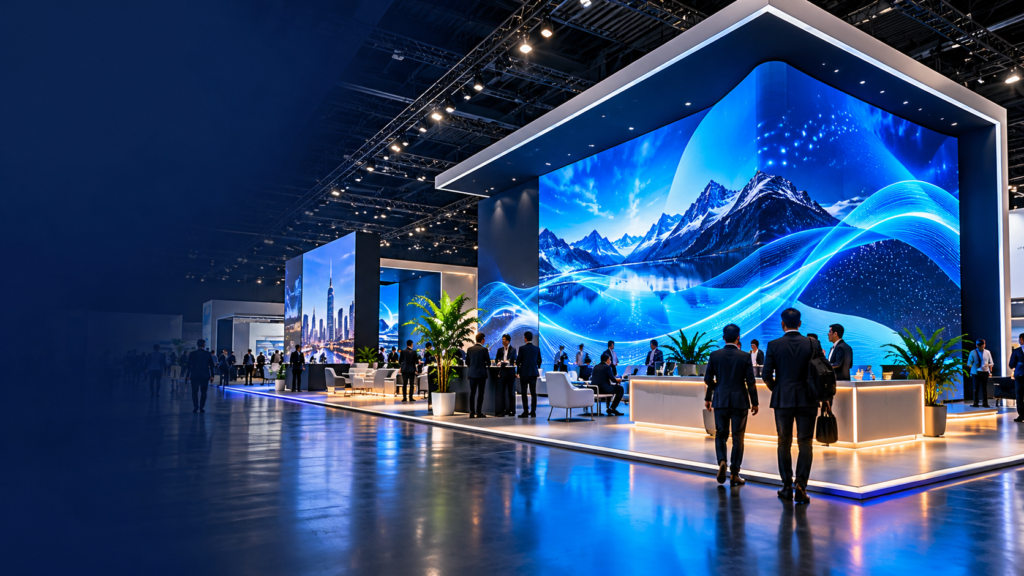
These screens can be used in retail storefronts, commercial buildings, exhibition spaces and selected architectural installations where businesses want to combine digital communication with contemporary design.
- What is a transparent LED display?
A transparent LED display is a digital display system designed to show images and videos while allowing some light and visibility to pass through its structure.
Unlike conventional solid LED video walls, transparent LED systems use specialised designs to reduce visual obstruction. Actual transparency depends on the product, pixel spacing, installation and display configuration.
This makes them an option for projects where maintaining a sense of openness is important.
2. Enhance modern glass facades
Glass facades are common in commercial buildings, shopping centres and contemporary office spaces. Transparent LED mesh displays can add digital visuals to suitable glass structures without creating the same appearance as a conventional opaque screen.
Businesses can use these installations for branding, seasonal campaigns, architectural visuals and promotional content.
However, the suitability of a display for a particular facade depends on the building structure, glazing system, mounting method and applicable regulations.
3. Create engaging retail storefronts
Retailers can use transparent LED screens to display product promotions, campaign videos and branded animations.
Potential applications include:
- Shopping mall storefronts.
- Luxury retail and showroom windows.
- Automotive display spaces.
- Commercial exhibition stands.
- Brand experience centres.
By combining digital content with the physical environment, businesses can create a distinctive storefront while retaining some visibility into the space behind the display.
- Explore flexible creative installations
Transparent LED mesh systems may support creative installations on suitable surfaces, including selected large glass areas and architectural structures.
Designers can use animated patterns, product visuals and branded content to complement a building’s appearance. Depending on the system, transparent displays may also be considered for temporary exhibitions and event installations.
Before selecting a solution, check the available panel sizes, installation requirements, content compatibility and maintenance access.
5. Understand the key selection factors
Choosing a transparent LED display requires more than comparing screen prices. Consider these important factors:
Transparency rate: Determine how much visibility is needed through the display and verify the manufacturer’s specifications.
Brightness: Assess the lighting conditions around the installation, including direct sunlight and nighttime viewing.
Pixel pitch and resolution: Choose a configuration suitable for the viewing distance and type of content.
Installation requirements: Evaluate the supporting structure, mounting arrangements, electrical supply and cable management.
Maintenance and energy use: Consider servicing access, operating conditions and the system’s rated power consumption.
A professional site assessment can help establish whether a transparent LED display is suitable for your project.
Conclusion
Transparent LED display screens create new possibilities for combining architecture, branding and digital communication. They can be particularly useful for commercial facades, retail storefronts and exhibition environments where conventional solid displays may not fit the design requirements.
RSAV Media Solution includes transparent LED mesh curtain displays in its product range. Visit the Our Project page to explore available display options and discuss your installation requirements.